
Fabric glossary
Lace, mesh, power mesh, satin, silk, modal, microfiber, tulle, and how each fabric behaves.
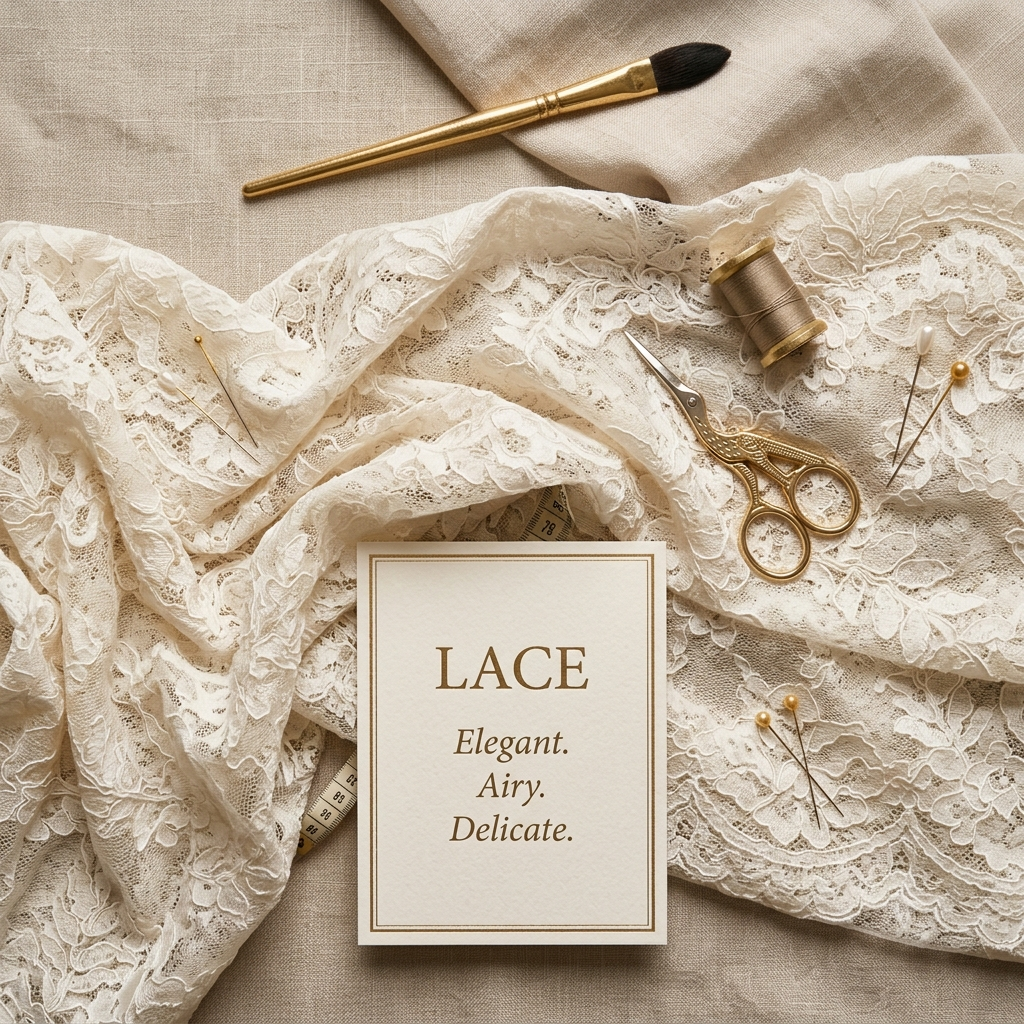
Lace
An openwork textile used for decorative detail, soft transparency, and romantic surface texture.
- Structure
- Can be rigid, stretch, embroidered, corded, or galloon-edged depending on fibre and construction.
- Feel
- Textured and delicate; softer stretch laces feel gentler against skin.
- Breathability
- High, especially in open patterns.
- Stretch
- Low in rigid lace; moderate to high when elastane is knitted into the lace.
Best Uses
- Bralettes
- Cup overlays
- Brief panels
- Straps and trims
Pros
- Lightweight
- Decorative
- Naturally breathable
Cons
- Can snag
- May feel textured under close-fitting clothes
- Needs careful washing
Care Instructions
Hand wash in cool water, avoid wringing, and dry flat away from direct heat.
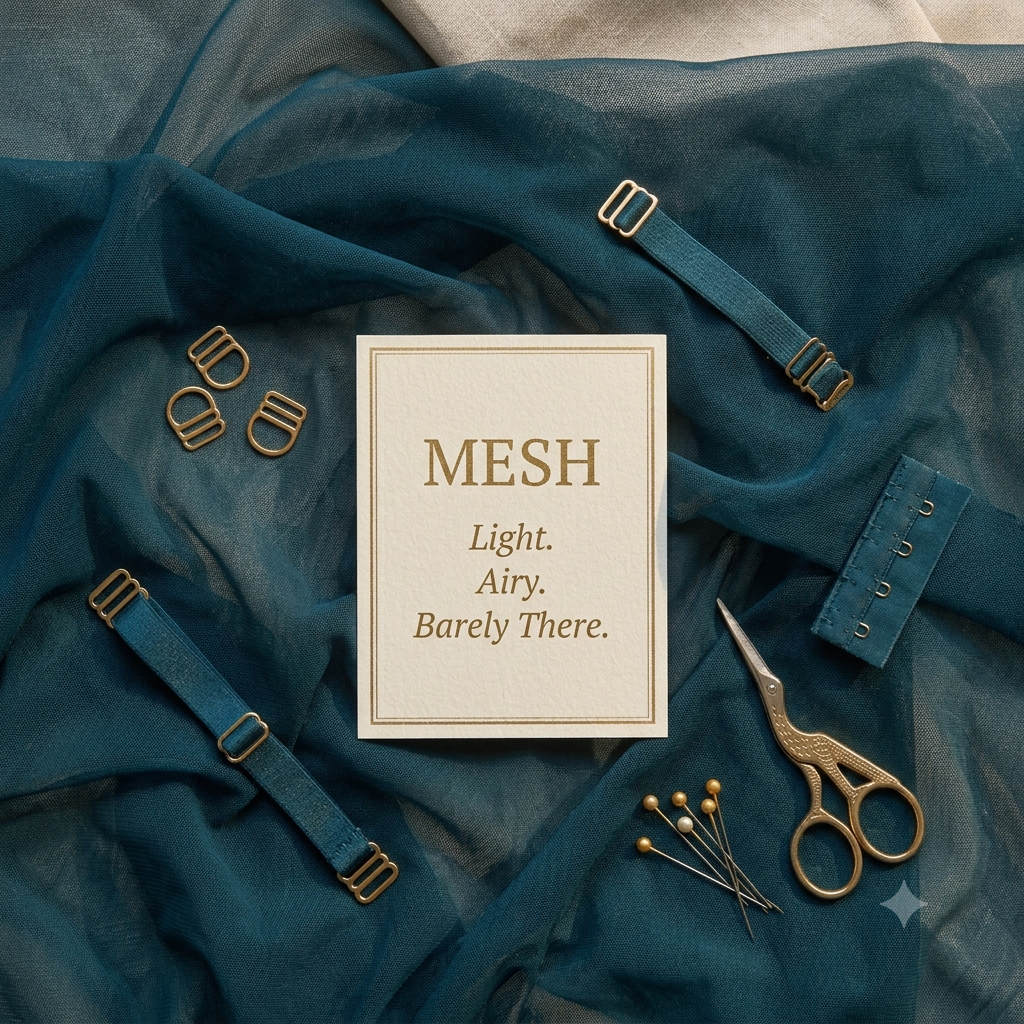
Mesh
A lightweight net-like fabric that adds sheerness, ventilation, and soft visual layering.
- Structure
- Usually knitted with fine synthetic yarns into an airy, open grid.
- Feel
- Light, smooth, and barely there when finished with soft seams.
- Breathability
- Very high because air can move through the open structure.
- Stretch
- Varies from stable to soft stretch depending on elastane content.
Best Uses
- Sheer cups
- Panels
- Back wings
- Layered knickers
Pros
- Breathable
- Lightweight
- Dries quickly
Cons
- Can be delicate
- May need lining for opacity
- Edges require careful finishing
Care Instructions
Use a lingerie bag on a gentle cool cycle or hand wash; air dry only.
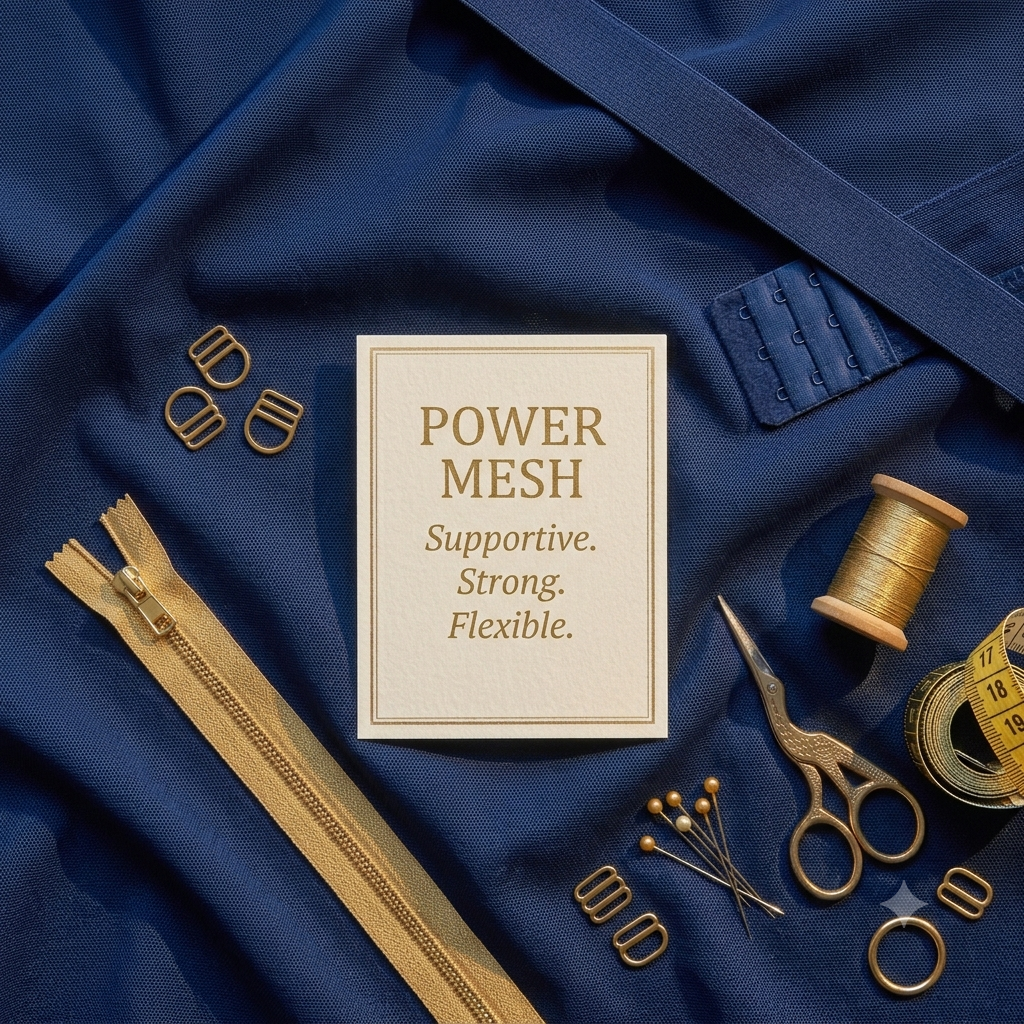
Power Mesh
A firmer mesh engineered for hold, recovery, and light compression without heavy bulk.
- Structure
- Dense elastic mesh with stronger yarn tension than standard fashion mesh.
- Feel
- Supportive and springy, with more resistance than soft mesh.
- Breathability
- Moderate to high; denser than mesh but still ventilated.
- Stretch
- Moderate to high with strong recovery.
Best Uses
- Bra bands
- Back wings
- Shaping panels
- High-waist briefs
Pros
- Adds support
- Holds shape well
- Keeps garments light
Cons
- Can feel firm
- May roll if cut too narrow
- Needs correct tension in fit
Care Instructions
Wash cool and avoid heat drying, which can weaken elastane recovery.
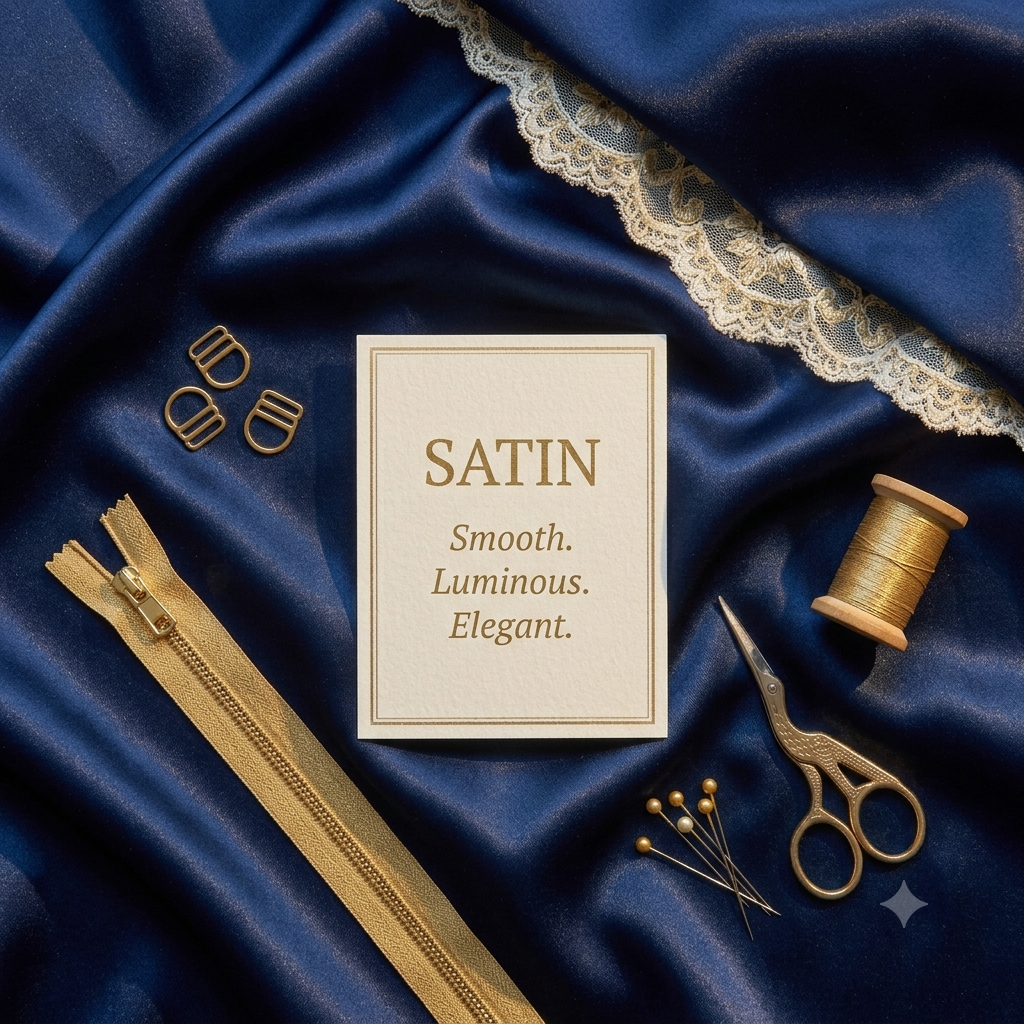
Satin
A smooth weave with a luminous surface; satin can be made from silk, polyester, or blended fibres.
- Structure
- Long floating yarns create the glossy face and smoother drape.
- Feel
- Sleek, cool to the touch, and fluid against skin.
- Breathability
- Depends on fibre; silk satin breathes more than polyester satin.
- Stretch
- Usually low unless blended with elastane or cut on the bias.
Best Uses
- Slips
- Robes
- Camisoles
- Decorative bra panels
Pros
- Elegant sheen
- Smooth under layers
- Drapes beautifully
Cons
- Can snag
- May show water marks
- Low-stretch versions need accurate fit
Care Instructions
Follow the fibre label; many satin pieces need cool hand washing or specialist cleaning.
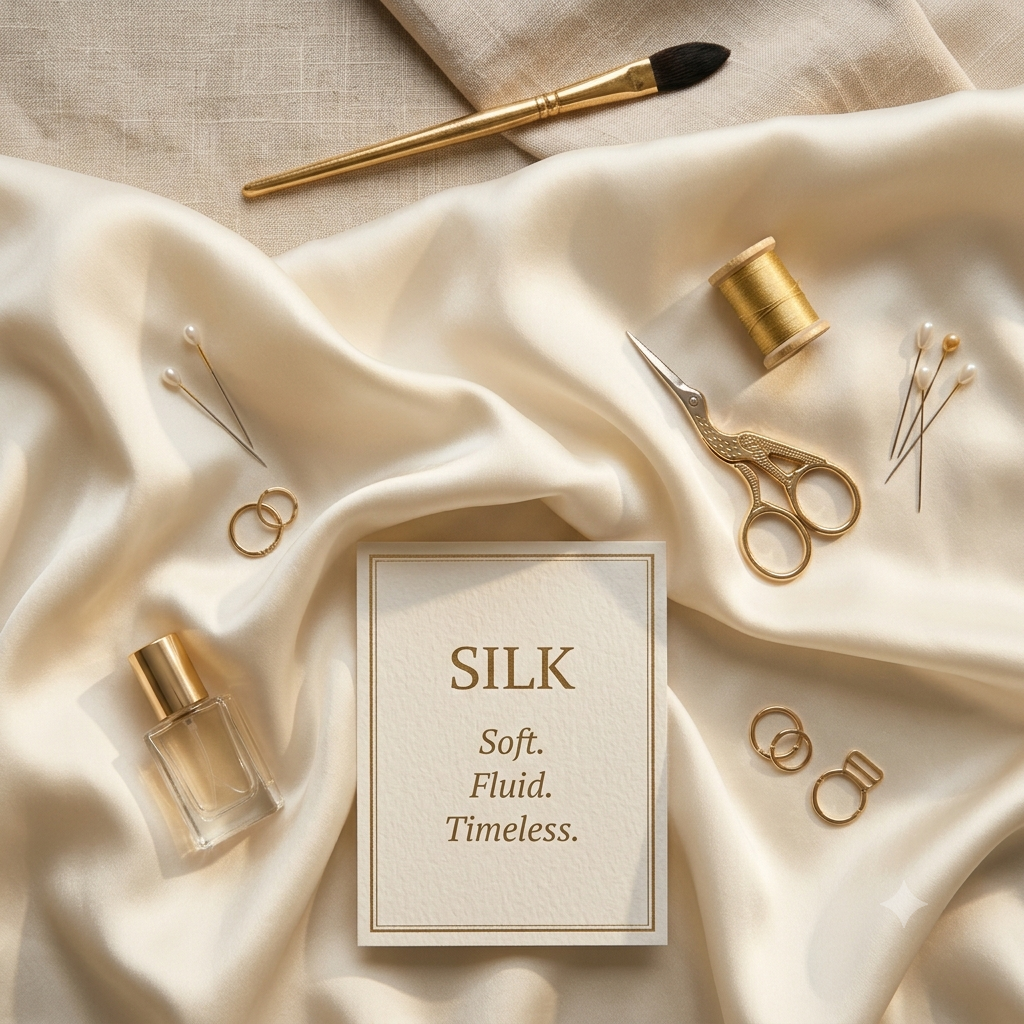
Silk
A natural protein fibre prized for softness, temperature comfort, and quiet lustre.
- Structure
- Fine continuous filaments woven into charmeuse, satin, crepe, or habotai finishes.
- Feel
- Soft, smooth, light, and naturally luxurious.
- Breathability
- High, with good temperature regulation.
- Stretch
- Low unless knitted or blended with elastane.
Best Uses
- Slips
- Robes
- Camisoles
- Luxury briefs
Pros
- Naturally breathable
- Gentle hand feel
- Temperature regulating
Cons
- More delicate
- Can be damaged by heat and harsh detergent
- Usually higher cost
Care Instructions
Use silk-safe detergent in cool water, press gently in a towel, and dry flat or on a padded hanger.
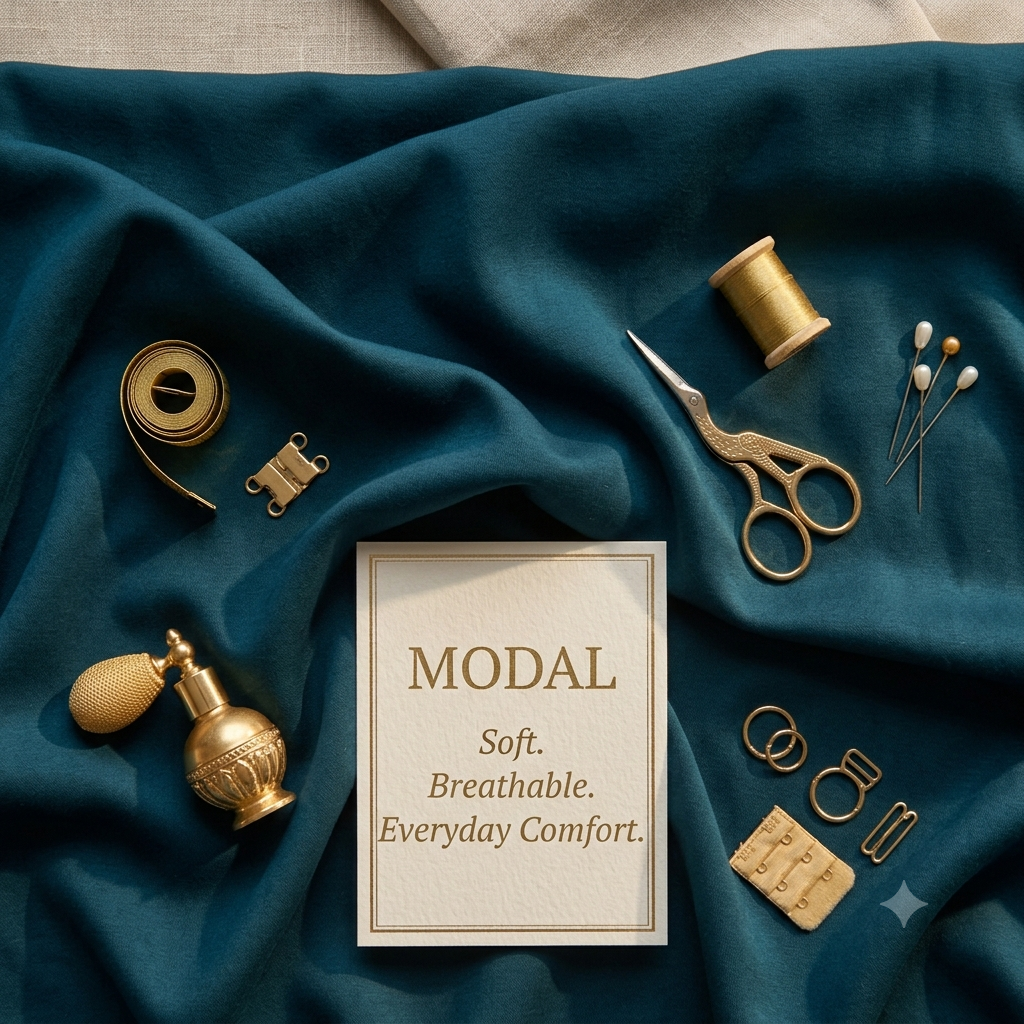
Modal
A soft regenerated cellulose fibre often used for smooth everyday pieces with gentle drape.
- Structure
- Knitted into fine jersey blends, commonly with elastane for recovery.
- Feel
- Very soft, fluid, and smooth.
- Breathability
- Moderate to high, with better moisture feel than many synthetics.
- Stretch
- Moderate when blended with elastane.
Best Uses
- Everyday briefs
- Soft bralettes
- Lounge lingerie
- Gusset linings
Pros
- Soft hand feel
- Drapes well
- Comfortable for everyday wear
Cons
- Can pill with friction
- May lose shape without enough recovery fibre
- Needs gentle washing
Care Instructions
Wash cool, avoid high heat, and dry flat or low to preserve softness.
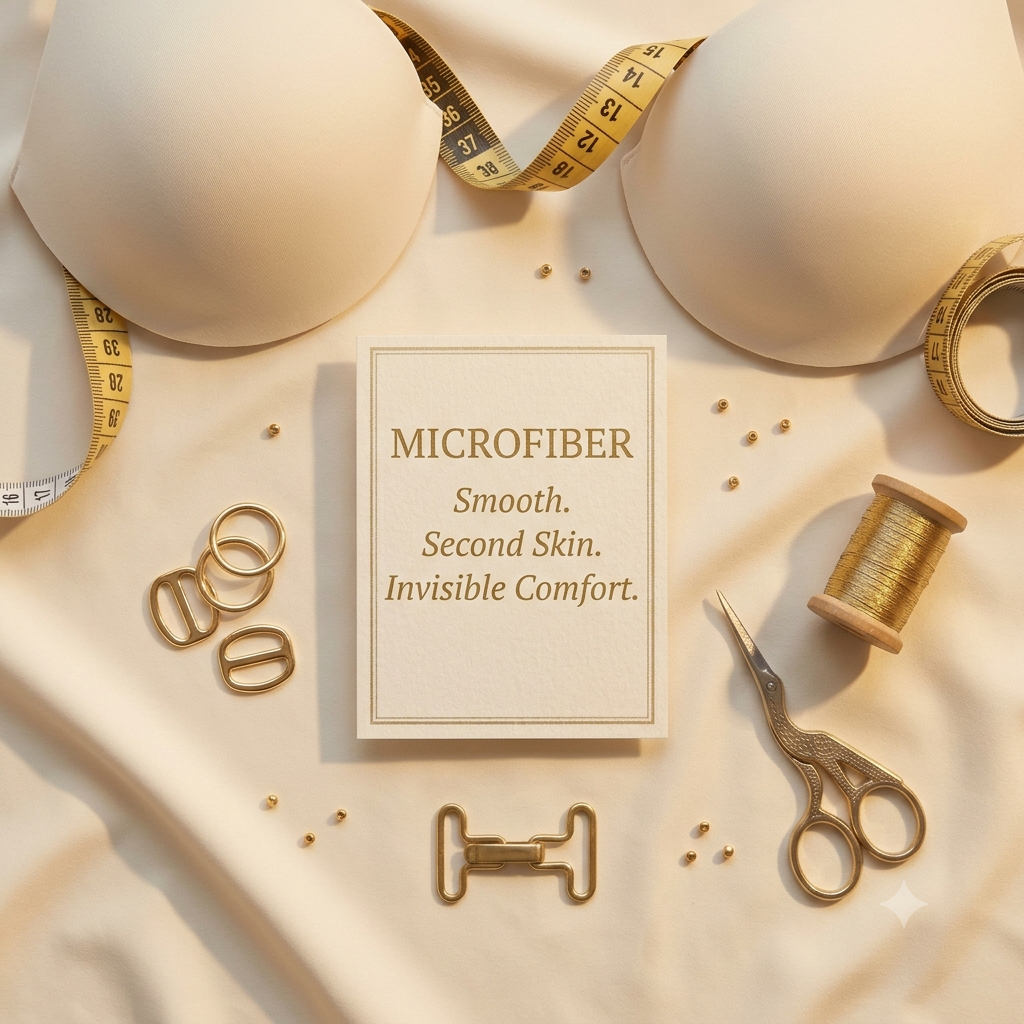
Microfiber
A fine synthetic knit used for smooth, lightweight, supportive everyday lingerie.
- Structure
- Very fine polyester or polyamide yarns knitted tightly for a sleek surface.
- Feel
- Smooth, light, and clean under clothing.
- Breathability
- Moderate; often improved by garment construction and lighter knits.
- Stretch
- Moderate to high when blended with elastane.
Best Uses
- T-shirt bras
- Seamless briefs
- Smoothing panels
- Everyday sets
Pros
- Smooth under clothes
- Good recovery
- Dries quickly
Cons
- Less breathable than cotton or mesh
- Can retain odour if washed too cool
- Heat can damage stretch
Care Instructions
Wash cool with mild detergent and air dry to protect elastane and surface smoothness.
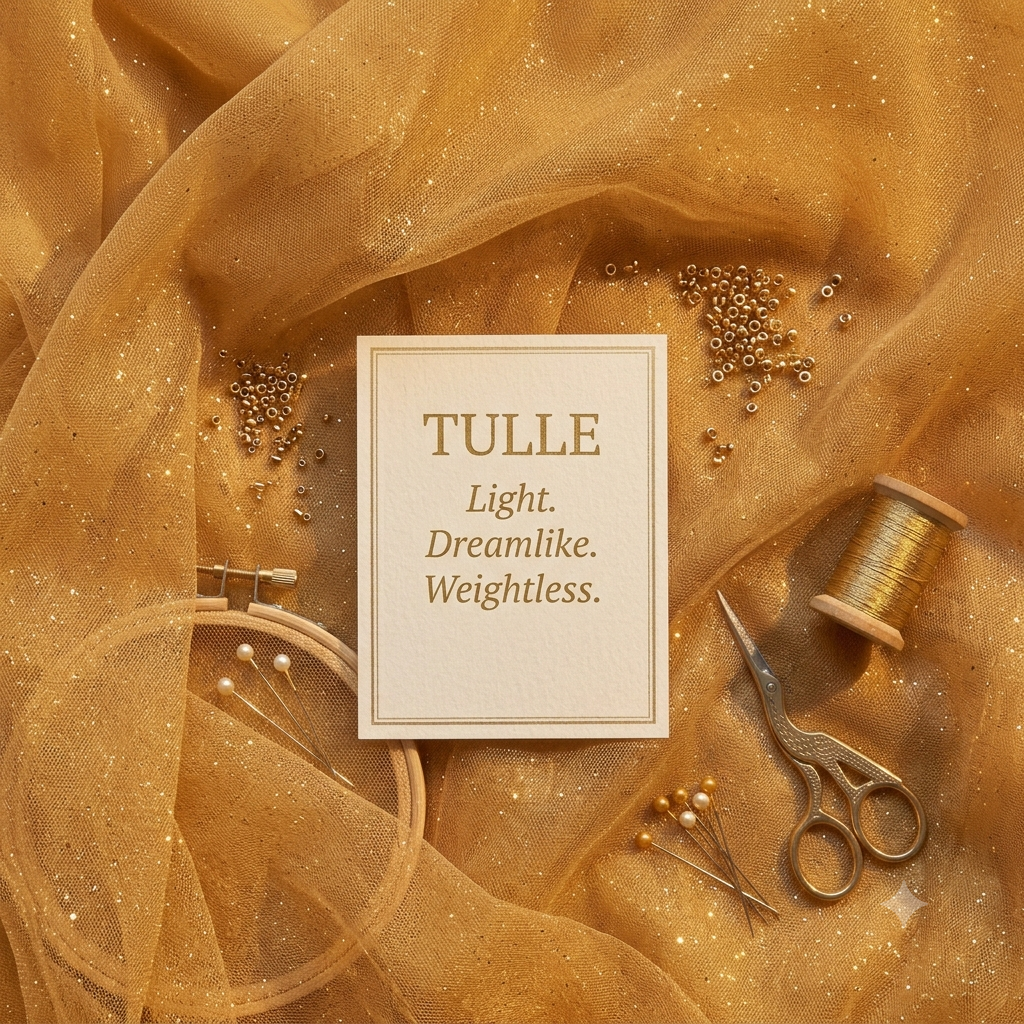
Tulle
A fine net fabric used for airy volume, delicate transparency, and soft decorative layers.
- Structure
- Stable or slightly elastic net made with very fine yarns and small openings.
- Feel
- Crisp to soft depending on finish; lighter tulle feels airy rather than structured.
- Breathability
- High because of its open net construction.
- Stretch
- Low in classic tulle; moderate when produced as stretch tulle.
Best Uses
- Overlays
- Sheer panels
- Decorative trims
- Layered details
Pros
- Very lightweight
- Creates dimension
- Adds transparency without weight
Cons
- Can snag
- May feel crisp on sensitive skin
- Needs smooth seam finishing
Care Instructions
Hand wash gently or use a lingerie bag on cool delicate cycles, then air dry flat.